


 English
 русский
 Español
About
Linhai Shuangmei Medical Supplies Co., Ltd.
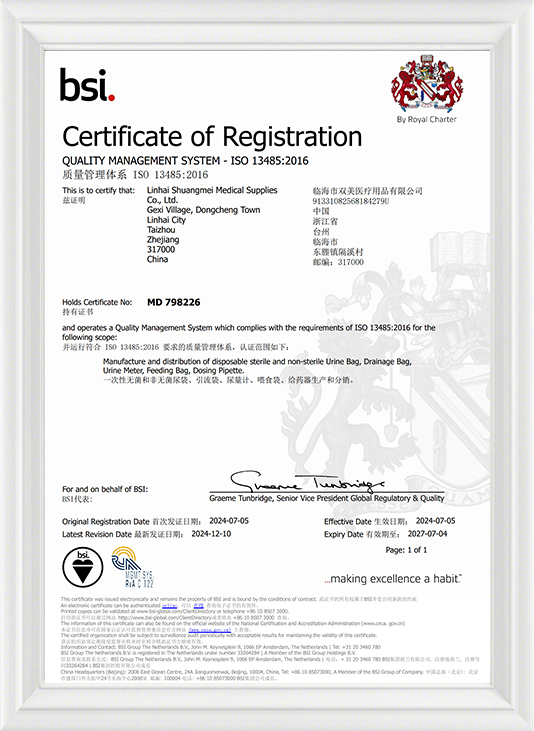
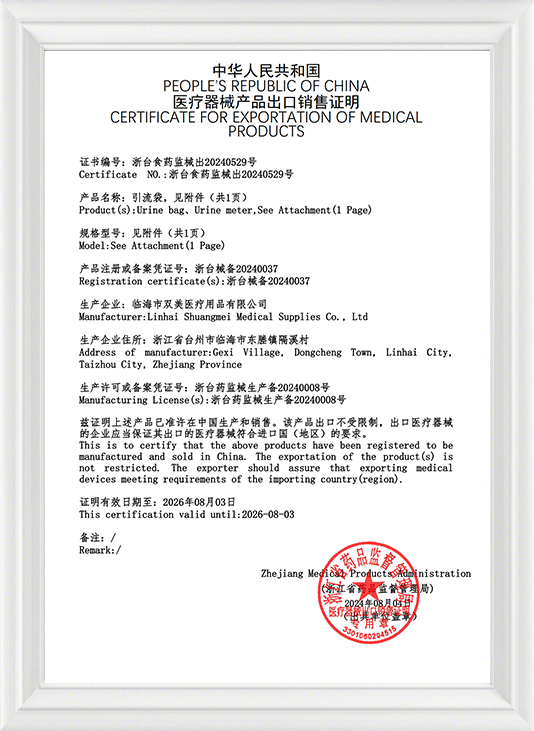
We are a professional China Urine Bag Accessories suppliers and Urine Bag Accessories factory, we are mainly engaged in wholesale Urine Bag Accessories. With production and cleanroom facilities covering 4,500 m², our core product range includesurine bag with t-type valve,pull-push valve, screw valve and pediatric urine bags. We are certified under ISO 13485, CE, and UKCA quality management systems. Comprehensive quality inspection procedures and a full suite of automated equipment ensure consistent and reliable product quality. Our products are widely exported to Europe, Asia, South America, and Africa, serving countries such as Italy, Greece, Russia, and Brazil. At Shuangmei, we are committed to prioritizing customer needs and delivering high-quality products. Guided by a brand-oriented approach and a philosophy of symbiosis, we have earned the trust and support of clients worldwide through our focus and precision. Professionalism builds our brand; sincerity creates value. We sincerely look forward to collaborating with you to build a brilliant future together.
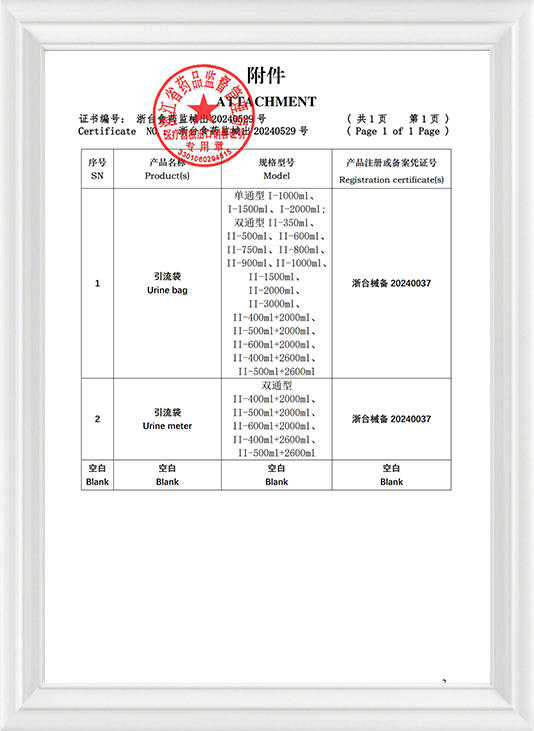
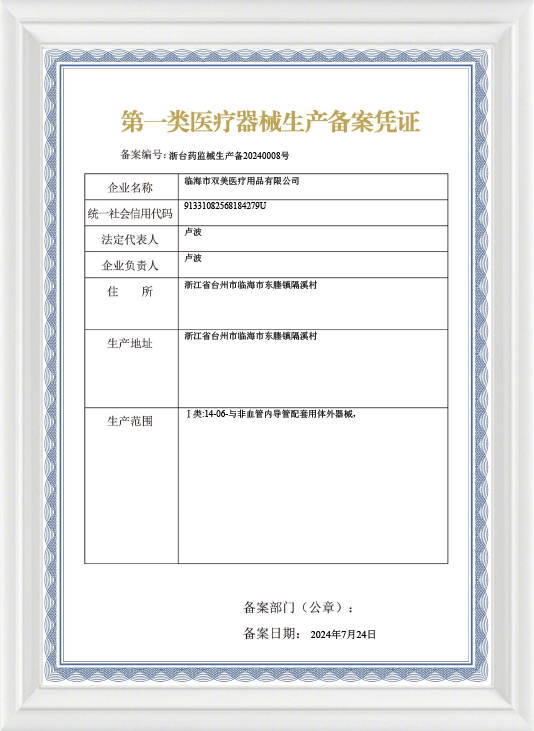
Certificate of Honor


News
-
In medical packaging and infusion systems, Dosing Pipette and Pediatric IV ...
READ MORE -
The increasingly segmented paediatric healthcare sector has transformed the...
READ MORE -
In liquid medication delivery systems, Dosing Pipette and Pediatric IV Bott...
READ MORE -
In liquid medication administration systems, Dosing Pipette and Pediatric I...
READ MORE -
Economy Urine Bag and Disposable Infusion Set are commonly used in hospital...
READ MORE -
Economy Urine Bag and Disposable Infusion Set are frequently included in em...
READ MORE
Urine Bag Accessories Industry Knowledge Extension
Urine Bag Accessories
Urine bag accessories are essential components designed to enhance the functionality and safety of disposable urine collection systems. These accessories typically include connectors, clamps, straps, drainage ports, and protective covers, each serving a specific role in maintaining hygiene and patient comfort. Properly designed accessories ensure secure connections between the urinary catheter and the urine bag, reducing the risk of leakage or accidental disconnection during daily care or patient movement. Some accessories, such as adjustable straps or leg bag holders, allow the urine bag to be positioned comfortably for mobile patients, while bedside stands and brackets support larger-volume bags in stationary setups. Anti-reflux connectors and clamps are critical in preventing backflow, which can less the risk of urinary tract infections and maintain sterility within the system. Transparent tubing and graduated drainage ports included in accessories allow for accurate monitoring of urine output, enabling healthcare providers to assess hydration status and kidney function efficiently. Moreover, urine bag accessories are often designed with materials that are biocompatible, durable, and easy to clean, which supports both patient safety and clinical convenience. Their integration into the overall urine collection system emphasizes careful fluid management, infection control, and ease of maintenance. Consistent inspection and replacement of worn or damaged accessories are important to maintain the integrity of the urinary collection setup.
Urinary Bag Parts
Urinary bag parts refer to the individual components that constitute a complete urine collection system, including tubing, valves, connectors, drainage ports, and bag enclosures. Each part is designed with careful consideration of patient safety, sterility, and usability. Tubing connects the catheter to the urine bag, often incorporating smooth, kink-resistant materials to facilitate uninterrupted fluid flow. Drainage ports, such as screw valves or tear-open outlets, allow controlled emptying of the bag without compromising hygiene, and some designs incorporate graduated markings for accurate volume measurement. Certain parts include anti-reflux mechanisms, such as one-way valves, to prevent urine from flowing back toward the bladder, which is critical for fewer infection risks during long-term catheterization. Bag enclosures are often transparent, allowing both caregivers and patients to observe fluid characteristics while maintaining sterile barriers. The integration of these parts ensures a reliable, cohesive system capable of managing urine output effectively across a range of clinical settings, from hospitals to home care environments. Regular maintenance and replacement of urinary bag parts are necessary to uphold safety standards and prevent contamination. Materials used in these parts are chosen to be biocompatible, lightweight, and durable, supporting both patient comfort and operational efficiency. By combining precise design and functional reliability, urinary bag parts contribute to a urine collection system that addresses clinical requirements while prioritizing hygiene, monitoring accuracy, and patient well-being.
Catheter Bag Accessories
Catheter bag accessories encompass the various supplemental components used in conjunction with urinary catheters and their connected collection systems. These accessories include tubing extensions, connectors, clamps, T valves, drainage ports, straps, and holders, all designed to facilitate safe and hygienic urine collection. Tubing extensions help provide flexibility in patient positioning, reducing tension on the catheter and enhancing comfort, while connectors and clamps secure the system and prevent accidental disconnection or leakage. The inclusion of T valves in catheter bag setups allows controlled sampling or drainage without disrupting the continuous flow or compromising sterility, which is particularly useful in clinical monitoring scenarios. Straps and leg bag holders provide convenient and stable support for mobile patients, whereas bedside stands and brackets are suitable for larger bags in stationary settings. Materials used in catheter bag accessories are generally biocompatible, transparent, and durable, allowing healthcare providers to monitor urine output while maintaining sterile conditions. Anti-reflux components are commonly integrated to lessen the risk of urinary tract infections, supporting safe long-term use. Routine inspection, maintenance, and timely replacement of catheter bag accessories are essential to ensure proper function and prevent contamination. Collectively, these accessories enhance the effectiveness, safety, and usability of catheter-based urine collection systems, providing healthcare providers with reliable tools to manage patient care across diverse medical settings.

Contact Us
-
 +86-0576-85229808
-
 [email protected]
-
 Gexi Village, Dongcheng Town, Linhai City, Zhejiang Province, China
Copyright © Linhai Shuangmei Medical Supplies Co., Ltd. All rights reserved. Approval No: 20240008.

Catheter Bag Accessories Factory