


 English
 русский
 Español
How Disposable Infusion Set Enhances Hospital Workflow Efficiency
Economy Urine Bag and Disposable Infusion Set are commonly used in hospital environments where basic patient support and fluid management need to be carried out with consistent workflow coordination. Within daily clinical operations, Disposable Infusion Set plays a direct role in simplifying intravenous fluid delivery steps, while Economy Urine Bag supports routine output management for patients with limited mobility, helping reduce interruptions in care routines.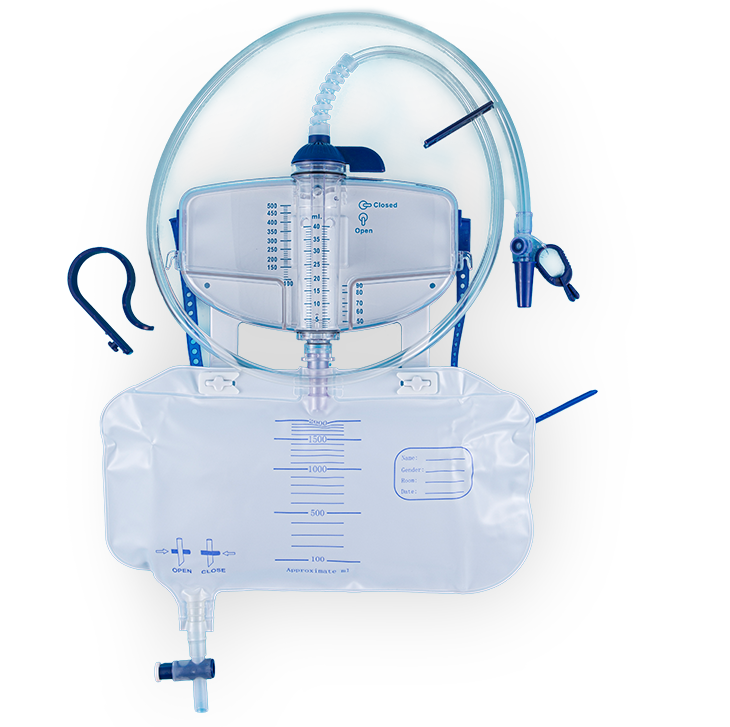
Workflow Pressure in Routine Hospital Care
Hospital wards, emergency units, and recovery rooms often manage a continuous flow of patients requiring fluid therapy and basic elimination support. In such environments, nursing teams work under time constraints while balancing multiple tasks such as monitoring vital signs, preparing infusion lines, and handling patient hygiene needs.
One recurring challenge is the fragmentation of routine procedures. For example, intravenous therapy involves several steps: preparation of the infusion set, connection to fluid containers, air removal, flow adjustment, and periodic monitoring. Each step requires attention, and when multiplied across many patients, the workload becomes segmented and repetitive.
At the same time, patients who require urinary management add another layer of coordination. Economy Urine Bag systems are often used for bedridden or post-operative patients, and require regular emptying, inspection, and replacement. When both infusion and urinary support are needed simultaneously, staff coordination becomes more complex, especially during peak hours or shift changes.
These overlapping responsibilities can cause delays in task completion or repeated handling of equipment, which affects the smoothness of ward operations rather than clinical decision-making itself.
Changes in Infusion System Design and Handling Approach
Disposable Infusion Set designs have gradually shifted toward simplified assembly structures and more standardized components. Instead of requiring multiple manual adjustments during setup, modern sets are designed to support quicker connection between fluid containers and patient lines, reducing unnecessary handling steps.
In typical hospital usage, the infusion process is now organized into a more linear workflow:
- Preparation of sterile packaging and checking integrity
- Direct connection to fluid source without additional assembly tools
- Air removal through built-in drip chamber design
- Controlled adjustment of flow rate using integrated regulators
- Continuous observation with fewer manual interruptions
This structure reduces repetitive manipulation during setup and allows nursing staff to allocate more attention to patient monitoring rather than equipment configuration.
Meanwhile, Economy Urine Bag systems complement this workflow by reducing the frequency of manual urine container handling. Their closed collection structure and standardized drainage interface support more predictable maintenance intervals, which helps nursing teams plan routine checks alongside infusion schedules rather than treating them as separate tasks.
Together, these tools support a more structured division of labor within ward routines, where fluid administration and waste management follow parallel but less overlapping paths.
Practical Application in Hospital Departments
Disposable Infusion Set usage is distributed across multiple hospital departments, each with slightly different operational requirements but similar workflow expectations.
In emergency departments, rapid fluid administration is often required during patient intake and stabilization. The simplified setup of infusion sets allows nursing staff to initiate therapy without extended preparation time, especially when multiple patients arrive within short intervals.
In surgical recovery units, patients frequently require post-operative hydration and medication infusion. The ability to maintain consistent flow control without repeated adjustment reduces interruptions during recovery monitoring. Economy Urine Bag systems are also used in these settings to manage post-surgical urinary output without requiring frequent patient repositioning.
In general wards, long-term patients receiving intravenous therapy benefit from reduced equipment handling frequency. Nursing staff can align infusion checks with routine vital sign monitoring, while urine bag maintenance is scheduled during regular care rounds.
In long-term care facilities, both products are often integrated into daily care routines where patients have limited mobility. The combination supports predictable workflow cycles, especially when staff-to-patient ratios require structured task distribution.
Operational Observations from Clinical Use Cases
Hospital workflow evaluations often focus on task distribution, time allocation, and frequency of equipment handling. In internal ward assessments conducted across multi-bed units, the use of Disposable Infusion Set systems has been associated with fewer intermediate handling steps during infusion setup compared with older multi-component systems.
For instance, in a general medical ward managing both intravenous therapy and urinary output tracking, staff noted that the infusion process required fewer adjustments after initial setup. This allowed nursing staff to group patient checks more efficiently, aligning infusion monitoring with routine vital checks rather than treating them as separate tasks.
A comparative observation from a mid-sized hospital unit managing 40–50 beds showed that when standardized Disposable Infusion Set systems were used alongside Economy Urine Bag products, the average number of manual interventions per patient care cycle became more predictable. This did not eliminate tasks but redistributed them into more structured intervals, reducing fragmented attention across unrelated procedures.
Another observation involved shift handovers. When equipment usage is standardized, incoming staff can interpret patient status more consistently without needing detailed explanation of individualized infusion setups or urine collection conditions. This contributes to smoother transitions between shifts, especially during peak admission periods.
NEXT:Emergency Response Kits: Economy Urine Bag Field Usage Scenarios
Interested in cooperation or have questions?

-
 +86-0576-85229808
-
 [email protected]
-
 Gexi Village, Dongcheng Town, Linhai City, Zhejiang Province, China
Copyright © Linhai Shuangmei Medical Supplies Co., Ltd. All rights reserved. Approval No: 20240008. The information provided on this website is intended for use only in countries and jurisdictions outside of the People's Republic of China.
 Privacy Policy
Medical Supplies Urine Bags Factory