


 English
 русский
 Español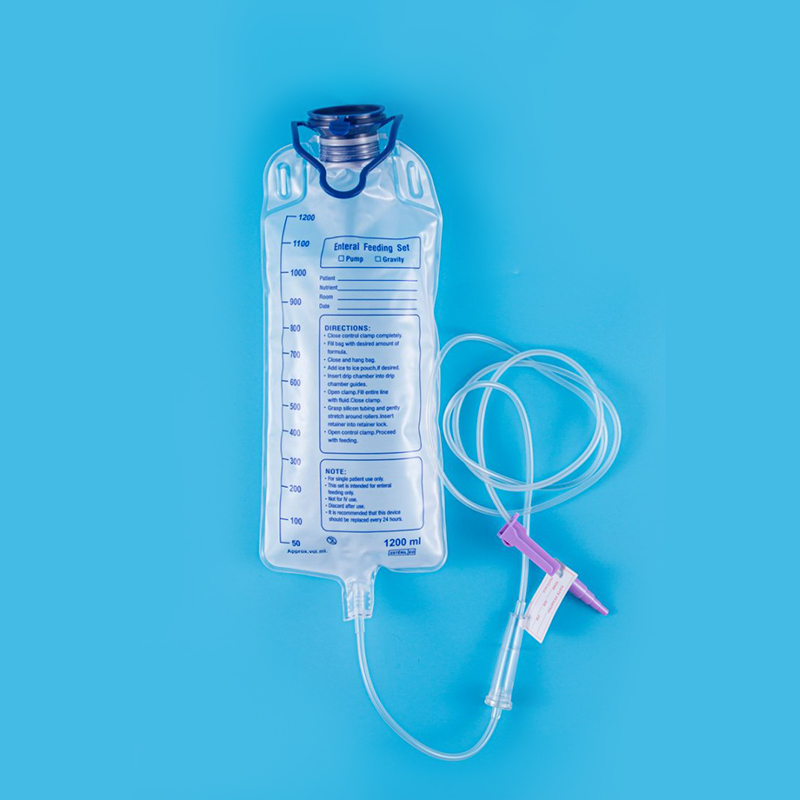
About
Linhai Shuangmei Medical Supplies Co., Ltd.
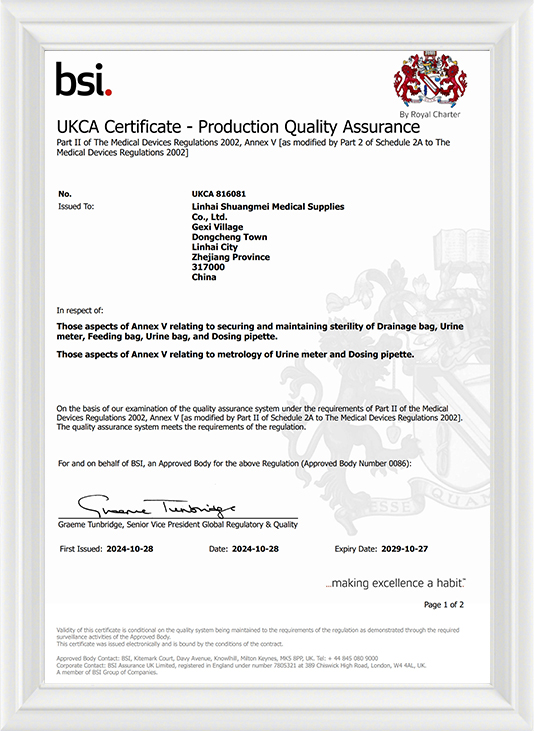
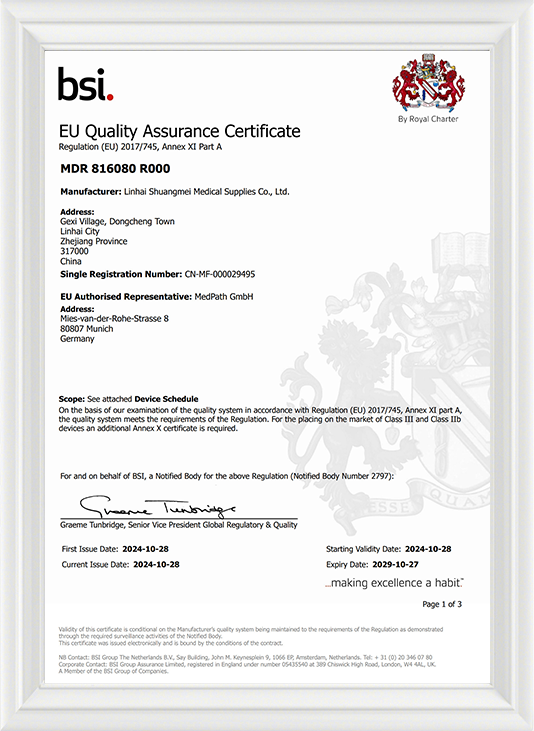
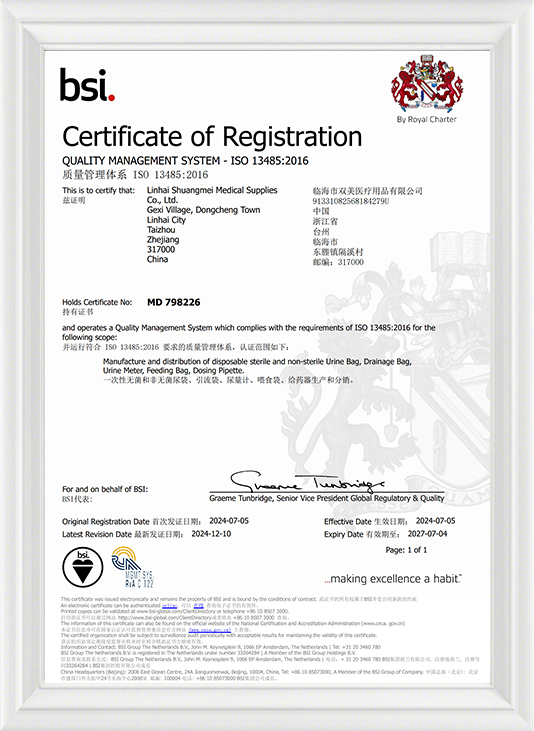
We are a professional China Feeding Bags suppliers and Feeding Bags factory, we are mainly engaged in wholesale Feeding Bags. With production and cleanroom facilities covering 4,500 m², our core product range includesurine bag with t-type valve,pull-push valve, screw valve and pediatric urine bags. We are certified under ISO 13485, CE, and UKCA quality management systems. Comprehensive quality inspection procedures and a full suite of automated equipment ensure consistent and reliable product quality. Our products are widely exported to Europe, Asia, South America, and Africa, serving countries such as Italy, Greece, Russia, and Brazil. At Shuangmei, we are committed to prioritizing customer needs and delivering high-quality products. Guided by a brand-oriented approach and a philosophy of symbiosis, we have earned the trust and support of clients worldwide through our focus and precision. Professionalism builds our brand; sincerity creates value. We sincerely look forward to collaborating with you to build a brilliant future together.
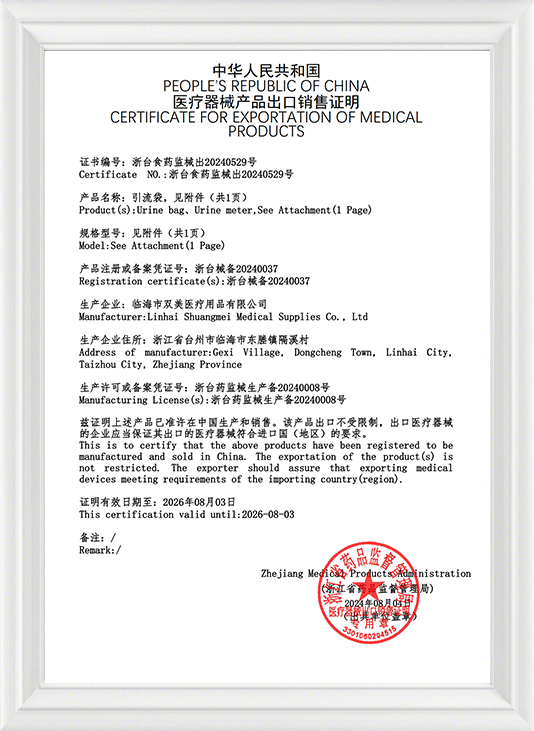
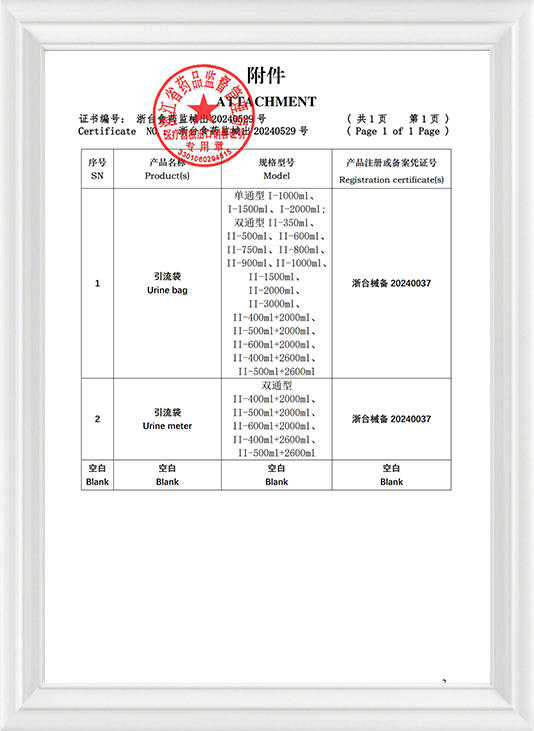
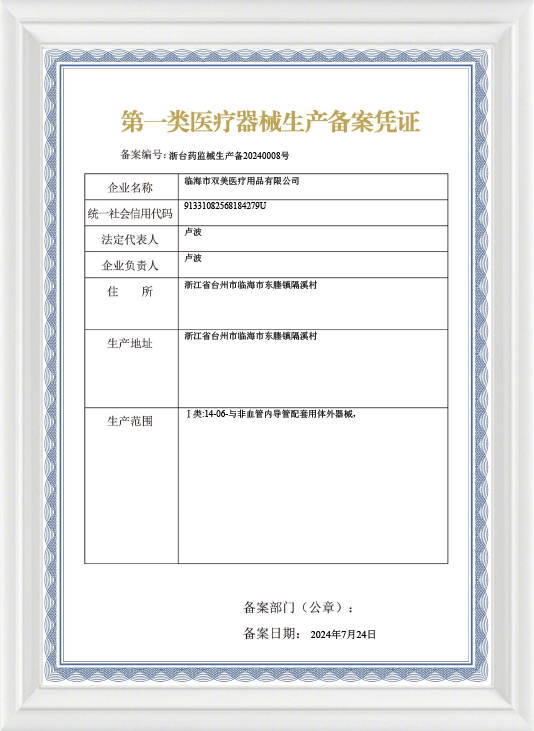
Certificate of Honor
News
-
As healthcare, laboratory, and industrial supply chains continue to focus o...
READ MORE -
The healthcare and medical supply industry is experiencing continuous chang...
READ MORE -
The demand for disposable medical and laboratory consumables continues to r...
READ MORE -
In medical packaging and infusion systems, Dosing Pipette and Pediatric IV ...
READ MORE -
The increasingly segmented paediatric healthcare sector has transformed the...
READ MORE -
In liquid medication delivery systems, Dosing Pipette and Pediatric IV Bott...
READ MORE
Feeding Bags Industry Knowledge Extension
Feeding Bags
Feeding bags are designed as single-use medical devices for the safe and hygienic administration of liquid nutrition to patients who are unable to consume food orally. These bags are constructed from medical-grade materials that are transparent, allowing healthcare professionals to monitor the feeding solution and flow rate easily. They typically include a secure inlet for connecting feeding syringes or tubes and an outlet for controlled delivery into the patient’s gastrointestinal tract. The bags are compatible with various enteral feeding systems and are available in multiple volumes to accommodate different patient needs. The design also considers factors such as leak prevention, ease of handling, and clear measurement markings to facilitate accurate monitoring. In clinical settings, feeding bags are commonly used in hospitals, long-term care facilities, and home healthcare environments. They are intended for single use, which helps reduce the risk of cross-contamination and maintains infection control standards. Healthcare providers are encouraged to follow standard protocols for storage, preparation, and disposal to ensure patient safety. Feeding bags are suitable for a range of liquid nutrition types, including standard formulas, specialized nutrient blends, and therapeutic solutions. By providing a reliable and consistent method for delivering nutrition, feeding bags contribute to comprehensive patient care and support clinical nutritional management without compromising hygiene or efficiency.
Medical Feeding Bag
A medical feeding bag is a single-use device designed to deliver liquid nutrition safely and efficiently to patients who cannot consume food orally. Constructed from medical-grade, transparent materials, the bag allows healthcare professionals to monitor fluid levels and flow with ease, ensuring accurate nutritional management. The design typically includes secure connectors compatible with feeding tubes or syringes, minimizing the risk of leakage or contamination during administration. Graduated measurement markings printed on the bag support precise monitoring of intake, which is essential for both adult and pediatric patients requiring controlled nutritional support. Many models incorporate flow-control features or clamps to regulate the feeding rate and prevent backflow, maintaining patient safety and comfort throughout use. Medical feeding bags are widely employed in hospitals, rehabilitation centers, and home healthcare environments, accommodating both intermittent and continuous feeding protocols. The disposable nature of the bag simplifies infection control procedures and reduces cross-contamination risks between patients.
Enteral Feeding Bags
Enteral feeding bags are designed as single-use medical devices to provide patients with safe and controlled liquid nutrition when oral intake is not possible. These bags are constructed from clear, medical-grade materials that allow healthcare providers to monitor the solution visually, ensuring accurate administration and observation of any changes in the feeding fluid. They are compatible with various enteral feeding systems and include secure connections to feeding tubes or syringes, which help minimize leakage and maintain a hygienic feeding environment. Many models feature graduated markings for precise measurement, as well as flow-control clamps or anti-reflux mechanisms to regulate the rate of feeding and reduce the risk of backflow. Enteral feeding bags are used in a variety of healthcare settings, including hospitals, long-term care facilities, and home healthcare environments, and they are suitable for both intermittent and continuous feeding methods. The single-use design supports infection control protocols and reduces cross-contamination risks between patients. Healthcare providers are expected to follow recommended procedures for preparation, use, and disposal to maintain safety standards. By offering a reliable and consistent method for delivering nutrition, enteral feeding bags play an important role in clinical nutritional management, supporting patient health and contributing to comprehensive care without compromising hygiene or clinical accuracy.

Contact Us
-
 +86-0576-85229808
-
 [email protected]
-
 Gexi Village, Dongcheng Town, Linhai City, Zhejiang Province, China
Copyright © Linhai Shuangmei Medical Supplies Co., Ltd. All rights reserved. Approval No: 20240008.

Enteral Feeding Bags Price