


 English
 русский
 Español
When Should Paediatric Urine Collector Be Applied in Clinics?
Many clinical teams and caregivers often encounter situations where urine output needs to be measured accurately, especially in infants who cannot communicate discomfort or symptoms. Devices such as the Urine Meter and Paediatric Urine Collector are frequently selected to support these routines, providing a more structured approach to observing urine volume in various clinical settings. Understanding when to apply these tools, and how they function in day-to-day care, helps reduce uncertainty and supports smoother workflows for both medical staff and caregivers.
Why Clinics Rely on Structured Observation for Infant Patients
Infants have limited ways to signal changes in hydration or physical condition, and urine output is one indicator that clinicians observe regularly. Diapers alone may not always offer the level of clarity required for certain cases. For example, when stool mixes with urine or when output is minimal, estimation becomes challenging. A paediatric urine collection device helps provide clearer information, making it easier to record changes over time.
A urine meter is commonly used for older children and adults when detailed volume readings are needed, particularly for postoperative or intensive care monitoring. While its structure differs from a paediatric collector, both devices support a shared objective—helping healthcare professionals track urine output with consistency.
Situations in Which a Paediatric Urine Collector Is Appropriate
Clinicians may choose a paediatric urine collector for several types of scenarios:
When Infants Require Precise Fluid Monitoring
Certain conditions—such as dehydration, fever, gastrointestinal issues, or suspected urinary-tract conditions—require closer observation. In these cases, relying on diaper checks alone may not give the detail needed. A collector allows staff to observe actual volume rather than estimating based on diaper weight or wetness.
When Postoperative Monitoring Requires Clarity
Infants recovering from surgery often have specific fluid balance targets. Even small changes can hold clinical significance. Using a collector ensures that urine output can be measured without repeatedly lifting or disturbing the baby during checks.
When Feeding Changes or Medication Adjustments Are Being Evaluated
If clinicians need to assess how an infant responds to new feeding schedules or medications, clearer urine output records can support those evaluations. A collector offers a way to track changes more consistently over several hours.
When A Clean Sample Is Needed for Laboratory Testing
Obtaining urine samples from infants can be difficult when relying on diapers. A paediatric urine collector provides a controlled method that reduces contamination risks, helping clinicians collect samples suitable for analysis.
How Proper Use Can Improve Workflow Without Causing Discomfort
Gentle Application and Skin Considerations
Infant skin is sensitive, so the collector is designed with medical-grade materials and a soft adhesive ring. Before application, the skin should be clean and dry, as oils or ointments may weaken adhesion. Gentle pressure—not firm rubbing—is enough to secure the seal.
Maintaining Stability During Movement
Infants move frequently, and the collector should remain stable during routine activities such as feeding or sleeping. Checking the seal during diaper changes helps prevent leakage. For longer monitoring periods, placing the drainage bag or container safely beside the crib reduces the chance of accidental pulling.
Simple Monitoring for Clinicians and Parents
Transparent or semi-transparent bags allow staff and caregivers to observe color and volume without disturbing the infant. This helps maintain routine care without frequent handling, which is especially useful at night or during shifts with higher patient loads.
Where the Urine Meter Fits in Broader Clinical Monitoring
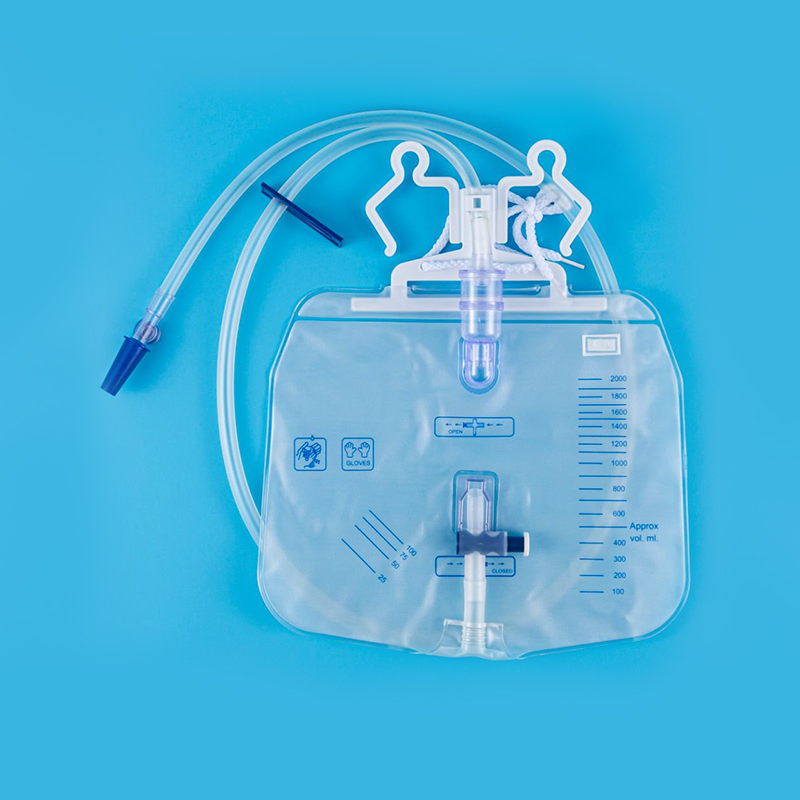
Although a urine meter is typically used for older patients, its principles help illustrate why structured measurement is important. The meter includes a measured chamber with clear graduation marks, allowing staff to record output accurately and quickly. This design is particularly useful during postoperative care, critical-care evaluations, or hydration assessments.
For infants who require detailed monitoring, the paediatric collector serves as the age-appropriate counterpart. While it does not include a measurement chamber, it offers a focused way to gather urine safely, after which clinicians can measure volume using a separate container if needed.
Supporting Accurate Laboratory Sampling With Controlled Collection
When clinicians need urine samples to test for infection, kidney function, or metabolic conditions, gathering uncontaminated samples becomes essential. A paediatric urine collector helps reduce the chance of mixing with stool or external substances. Because the bag is secured directly to the infant, it supports cleaner collection and simplifies the process.
For setups involving a urine meter, sampling ports offer a practical way to withdraw urine for analysis without disconnecting tubing or exposing the system unnecessarily. These features help maintain hygiene and support efficient workflow during rounds.
NEXT:What Makes Urine Meter Useful in Postoperative Fluid Tracking?
Interested in cooperation or have questions?

-
 +86-0576-85229808
-
 [email protected]
-
 Gexi Village, Dongcheng Town, Linhai City, Zhejiang Province, China
Copyright © Linhai Shuangmei Medical Supplies Co., Ltd. All rights reserved. Approval No: 20240008. The information provided on this website is intended for use only in countries and jurisdictions outside of the People's Republic of China.
 Privacy Policy
Medical Supplies Urine Bags Factory