


 English
 русский
 Español
What is the difference between a disposable urine collection bag and a drainage bag?
Although both disposable urine bags and drainage bags are single-use medical devices for bodily fluid collection, they differ significantly in design purpose, structural features, and clinical applications. Below are their key distinctions:
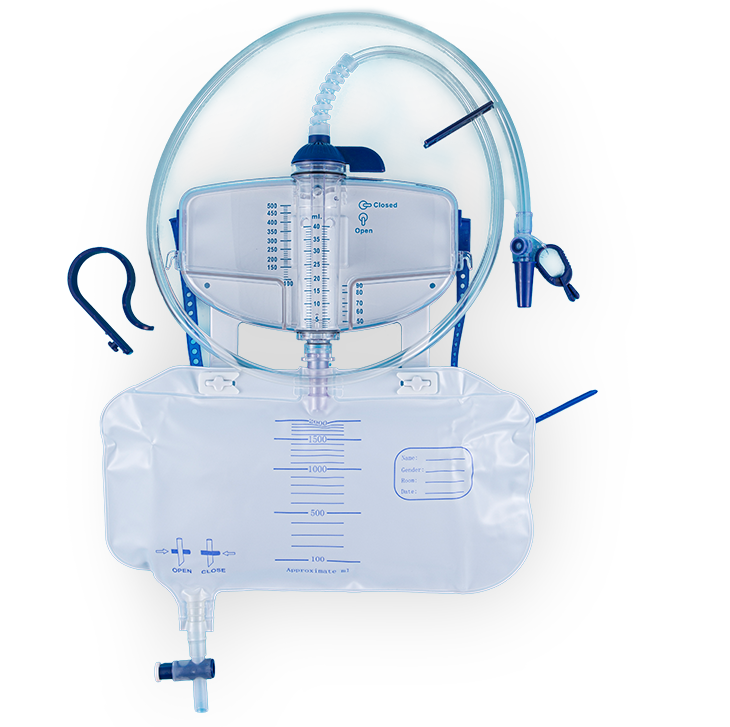
1. Different Design Purposes
Urine Bags: Specifically designed for urine collection, typically connected to a urinary catheter. Used for incontinence, postoperative catheterization, or bedridden patients.
Drainage Bags: Primarily used to collect postoperative or traumatic exudates, such as blood, pus, pleural/abdominal fluids, etc., making them more versatile in application.
2. Structural Differences
Urine Bags:
Smaller capacity (500–2000 mL), suitable for urine collection.
Must include an anti-reflux design (e.g., one-way valve) to prevent urine backflow into the bladder, reducing urinary tract infection risks.
Features a bottom drainage port (e.g., screw valve) for easy emptying.
Some advanced models may include volume measurement or temperature-sensing functions.
Certain designs are wearable (leg bags) for mobile patients.
Drainage Bags:
Wider capacity range (100–3000 mL), with options based on drainage volume.
Various connector types to accommodate different drainage tubes (e.g., chest tubes, wound drains).
Some include anti-reflux mechanisms (e.g., for thoracic drainage), but not all models require this.
Multiple drainage port designs, including screw valves, tear-open outlets, or tube connectors.
Certain models feature negative-pressure assistance (e.g., elastic bulbs) to enhance drainage efficiency.
3. Different Clinical Applications
Urine Bags:
Mainly used in urological care, such as postoperative catheterization, long-term indwelling catheters, or incontinence management.
Emphasizes sterility and infection prevention, requiring regular replacement (typically every 24–48 hours).
Drainage Bags:
Used for postoperative wound drainage, abscess drainage, or pleural/abdominal effusion removal.
Selection depends on drainage volume and fluid properties (e.g., viscosity, infectiousness).
Specialized designs (e.g., high-negative-pressure systems) may be needed for thick or infected fluids.
4. Infection Control Requirements
Urine Bags:
Urine may contain bacteria, making anti-reflux and sterile designs critical, especially for long-term use.
Drainage Bags:
Drainage fluids (e.g., blood, pus) may carry higher infection risks, requiring strict contamination prevention.
Some include bacterial filters to balance internal pressure and block external microbes.
5. Similarities
Both are single-use to prevent cross-contamination.
Transparent material allows easy monitoring of fluid characteristics and volume.
Require periodic replacement based on clinical needs.
Summary
The core differences lie in:
Urine bags: Designed specifically for urine, prioritizing anti-reflux and urinary tract infection control.
Drainage bags: Serve broader purposes, adapting to diverse fluids and clinical scenarios with more flexible designs.
In practice, the choice depends on patient-specific needs (e.g., fluid type, infection risk, mobility).
In addition to their distinct purposes, the proper handling and usage of disposable urine bags are essential for maintaining patient safety and hygiene. A medical urine collector, when used correctly, less the risk of urinary tract infections and ensures accurate monitoring of urine output, which can be critical in postoperative care or for patients with chronic conditions. The inclusion of a urine bag T valve in some systems allows for controlled drainage and easy access for sampling without disconnecting the catheter, reducing the potential for contamination.
Healthcare professionals often select disposable urine bags based on the patient’s mobility and clinical needs. For example, leg bags with adjustable straps provide convenience for mobile patients, allowing them to move with relative comfort while maintaining continuous urine collection. In contrast, larger bedside bags are typically used for patients who are bedridden or require close monitoring of fluid output. Proper positioning of the urine bag, such as keeping it below the bladder level, helps prevent backflow and supports the effectiveness of the anti-reflux mechanisms integrated into the design.
Routine maintenance and careful observation are necessary when using medical urine collectors. Healthcare providers should inspect the system regularly for signs of leakage, blockages, or unusual changes in urine characteristics. Disposable urine bags simplify infection control because they are replaced at recommended intervals, reducing the risk of bacterial growth within the system. The materials used are typically transparent and durable, allowing both patients and caregivers to monitor urine volume and color with small disruption.
NEXT:The principle of disposable extracorporeal drainage bag.
Interested in cooperation or have questions?

-
 +86-0576-85229808
-
 [email protected]
-
 Gexi Village, Dongcheng Town, Linhai City, Zhejiang Province, China
Copyright © Linhai Shuangmei Medical Supplies Co., Ltd. All rights reserved. Approval No: 20240008. The information provided on this website is intended for use only in countries and jurisdictions outside of the People's Republic of China.
 Privacy Policy
Medical Supplies Urine Bags Factory