


 English
 русский
 Español
Comparison Of Common Urine Bag Specifications
Urine bags are widely used in medical settings to manage patient fluid output efficiently and safely. Selecting the appropriate type and specification of a urine bag can impact both patient comfort and clinical workflow. Various designs exist, including standard adult urine bags, male urine guard pouches, and pediatric urine collectors, each offering unique features for different patient needs. Understanding these differences is essential for healthcare professionals, caregivers, and institutions aiming to maintain high standards of hygiene and patient care.
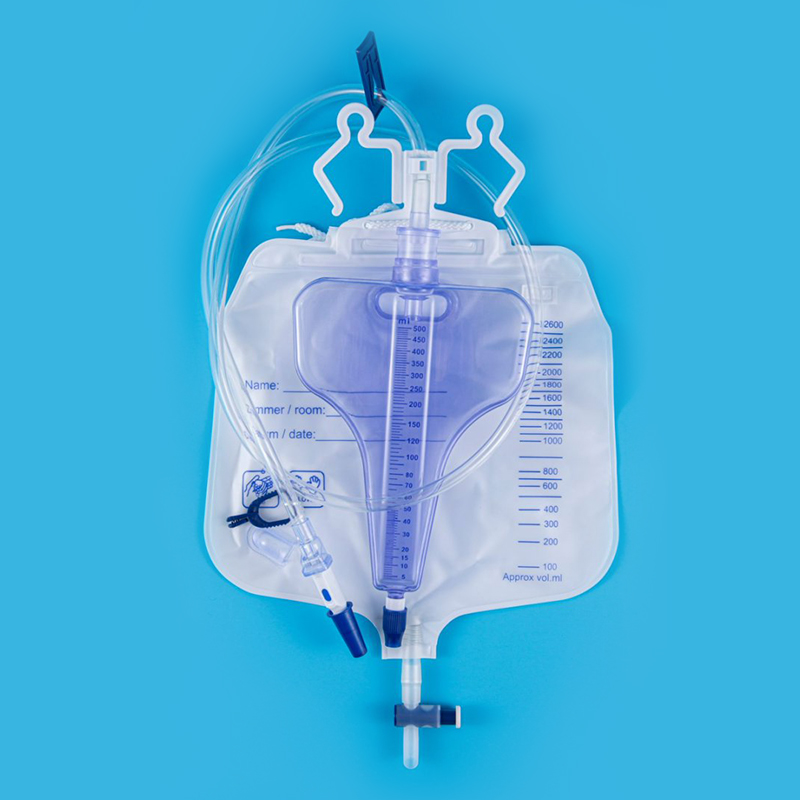
A standard urine bag typically consists of a collection reservoir, tubing, and a connector compatible with a catheter or external device. These bags are often made from medical-grade PVC or similar materials that are lightweight and flexible. The capacity of standard adult urine bags generally ranges from 1,000 to 2,000 milliliters, allowing for extended use between emptying intervals. Features such as graduated markings along the side of the bag help medical staff monitor urine output accurately, supporting fluid balance assessment and other clinical observations.
Male urine guard pouches are designed to provide a secure and comfortable option for male patients who may not require full catheterization. These pouches typically include a soft, adhesive interface that adheres to the patient's body while connecting to tubing and a collection bag. Their design allows for discreet wear and mobility, reducing the risk of leaks and irritation. When selecting a male urine guard pouch, attention to material quality, adhesive performance, and tubing compatibility is important. Proper fit ensures effective fluid collection with less discomfort during use.
Pediatric urine collectors are specialized devices intended for infants and young children. These collectors are smaller in size and designed to accommodate sensitive skin while maintaining a secure seal to prevent leaks. Soft, hypoallergenic adhesives are commonly used, and the bags themselves are lightweight to avoid placing strain on the child. Pediatric urine collectors may also include features that facilitate non-invasive monitoring, allowing caregivers and healthcare providers to gather accurate urine output measurements without causing distress. Considerations such as bag volume, adhesive type, and ease of application play an important role in ensuring that the device is both functional and comfortable for young patients.
In addition to urine collection devices, other related medical supplies, such as IV infusion supplies, are frequently used in conjunction with urine bags in clinical care. IV infusion sets enable controlled fluid administration, which may influence urine output and monitoring. Compatibility between urine collection devices and IV equipment can streamline patient management, particularly in hospital wards, intensive care units, or home care environments. Coordinating the use of urine bags and IV infusion supplies supports a comprehensive approach to fluid management and patient monitoring.
When comparing common urine bag specifications, several factors should be evaluated. Capacity is a primary consideration, as larger volumes reduce the need for frequent emptying, while smaller bags may be preferable for mobility and discreet use. Material and design quality affect durability, flexibility, and ease of handling, which can influence both caregiver workflow and patient comfort. The type of connector, including compatibility with catheters or external pouches, also determines how efficiently the bag can be integrated into existing medical setups. Furthermore, features such as graduated markings, anti-reflux valves, and secure closure mechanisms contribute to accuracy in monitoring and reduce the risk of contamination or leakage.
Attention to material, design, and compatibility ensures that these devices perform reliably while providing comfort and safety. Incorporating related supplies, such as IV infusion equipment, into the patient management plan can further enhance clinical efficiency and monitoring accuracy. By evaluating these factors carefully, healthcare providers can select the more suitable devices for their patients, needs, supporting both clinical outcomes and patient experience.
NEXT:Application Of Leak-Proof Design In Modern Urine Bags
Interested in cooperation or have questions?

-
 +86-0576-85229808
-
 [email protected]
-
 Gexi Village, Dongcheng Town, Linhai City, Zhejiang Province, China
Copyright © Linhai Shuangmei Medical Supplies Co., Ltd. All rights reserved. Approval No: 20240008. The information provided on this website is intended for use only in countries and jurisdictions outside of the People's Republic of China.
 Privacy Policy
Medical Supplies Urine Bags Factory