


 English
 русский
 Español
Connector Designs And Compatibility Of Drainage Bags
The design and compatibility of connectors for drainage bags play a significant role in ensuring safe and effective fluid management. Drainage bags are widely used across hospital and home care settings, including nighttime catheter bags, catheter leg bags supplies, and disposable infusion systems. A well-designed connector system not only improves patient comfort but also helps maintain hygiene and reduces the risk of complications during use.
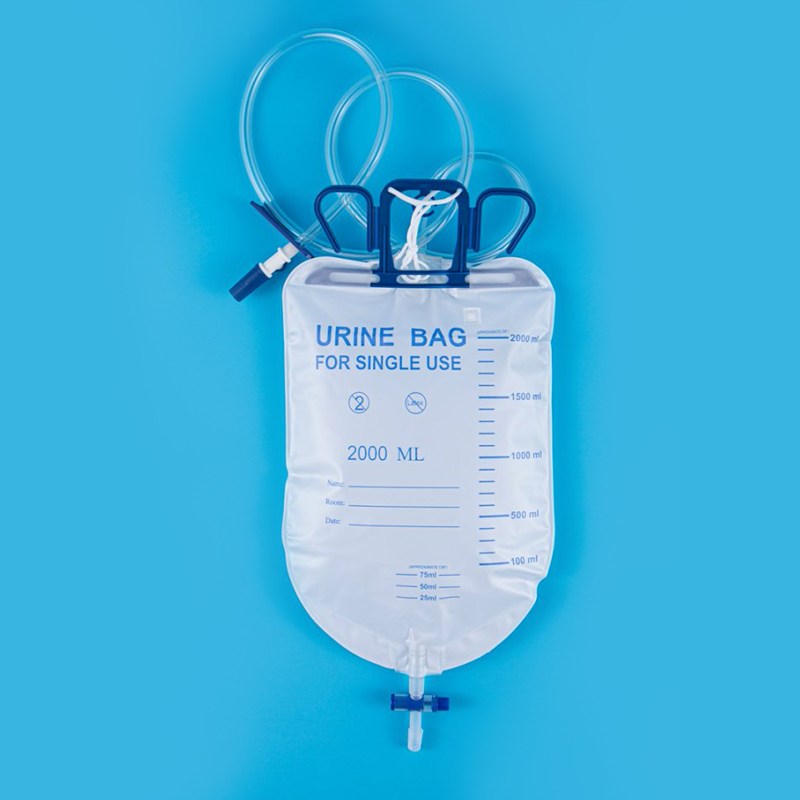
Connectors serve as the critical interface between the patient's catheter and the drainage bag. For night time catheter bags, connectors must allow secure attachment to accommodate extended periods of use while lying down. These connectors are designed to prevent accidental disconnections and leaks, which is particularly important during sleep. Smooth operation and reliable sealing are essential features to ensure that night time urine collection remains discreet and convenient. The material used for connectors is generally flexible yet sturdy, often made from medical-grade plastics or silicone, to balance durability with patient comfort.
For catheter leg bags, which are commonly used by patients who remain mobile throughout the day, connector design focuses on flexibility and ease of handling. Leg bag connectors need to allow quick attachment and detachment while maintaining a tight seal to prevent leaks. The tubing and connector interface are carefully designed to accommodate movement and reduce the chance of kinking, which could interfere with urine flow. Compatibility with various catheter types is a key consideration, ensuring that patients and caregivers can use the bags without needing multiple adapters. Smooth connectors with secure locking mechanisms make it easier for patients to manage their devices independently, supporting day-to-day mobility.
Disposable infusion systems also rely on precise connector designs to ensure that fluids are delivered safely and accurately. Connectors for disposable infusion bags must prevent accidental contamination and maintain sterility throughout use. In many cases, these connectors feature standardized fittings that allow them to be compatible with a range of catheters and tubing systems. This compatibility is critical in clinical settings where different types of bags and catheters may be used interchangeably. A secure and compatible connector reduces the need for manual adjustments and decreases the likelihood of spillage or leakage.
One of the challenges in designing connectors is balancing ease of use with secure attachment. Connectors must be simple enough for patients or caregivers to operate without specialized training while still providing a reliable seal. Some designs incorporate quick-connect mechanisms that allow users to attach or detach bags with little effort, while others use screw-threaded fittings to provide a secure, leak-proof connection. The choice of connector type often depends on the specific application, whether it is for a night time catheter bag, a leg bag, or a disposable infusion system.
Compatibility also extends to the range of tubing sizes and catheter types. Standardized connectors make it possible for a single drainage bag design to be used with multiple catheters, reducing inventory complexity and supporting ease of use. Medical teams benefit from this standardization, as it reduces errors during setup and ensures that patients receive consistent care. In addition, standardized connectors allow manufacturers to implement quality control processes more efficiently, as each component can be tested for fit and performance before use.
Patient comfort is another important consideration in connector design. Connectors that are too rigid can cause discomfort or pressure on the skin, while flexible designs reduce strain during movement. For night time catheter bags and leg bags, the connector should allow the tubing to bend naturally, adapting to the patient's position without compromising the seal. Materials must also be biocompatible to lessen skin irritation or allergic reactions, supporting safe and long-term use.
NEXT:Differences Between Disposable And Reusable Products
Interested in cooperation or have questions?

-
 +86-0576-85229808
-
 [email protected]
-
 Gexi Village, Dongcheng Town, Linhai City, Zhejiang Province, China
Copyright © Linhai Shuangmei Medical Supplies Co., Ltd. All rights reserved. Approval No: 20240008. The information provided on this website is intended for use only in countries and jurisdictions outside of the People's Republic of China.
 Privacy Policy
Medical Supplies Urine Bags Factory